How to count rows in your knitting
Patterns say "work 24 rows" or "repeat rows 1–8 six times". If you lose count, the knitting itself can tell you where you are.
Stockinette: count the Vs
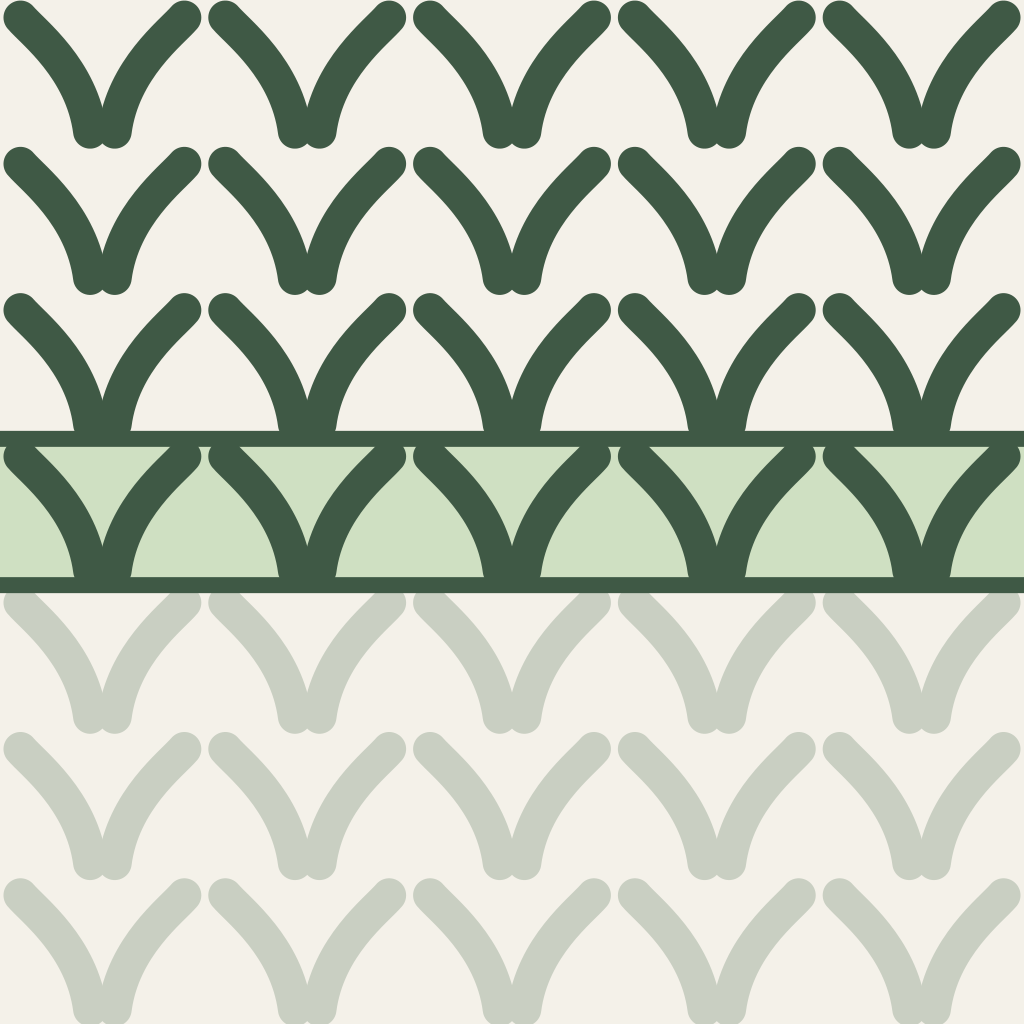
On the knit side every stitch looks like a small V, and each V stacked in a column is one row. Pick one column and count the Vs upwards. Decide once whether you count the cast-on edge, and count the same way every time; patterns usually start counting from the first row worked after it.
Garter stitch: count the ridges
In garter stitch every ridge is two rows. Count the ridges on one side and double the number.
Ribbing and textured stitches
Find a column of knit stitches in the ribbing and count its Vs, just as in stockinette. Purl bumps are harder to tell apart.
Put in a marker every ten rows
Hook a removable stitch marker into the fabric every ten rows, or at the start of every repeat. Then you only ever have to count up to ten from the last marker.
Use a lifeline for lace and long charts
At the end of a repeat, thread a smooth yarn through every stitch on the needle. If you need to rip back, you stop at that line with every stitch held, and you know exactly which row it is.
Repeats need two numbers
"Repeat rows 1–8 six times" asks you to keep two counts: the row inside the repeat, and which repeat you are on. Row 4 of 8 in repeat 4 of 6 means three full repeats and four rows are done: 28 of the 48 rows in that step. Write both numbers down whenever you stop.
Doing it on a phone
Stitchhold counts both numbers for you. Paste your pattern or photograph the page, and each line becomes a step. The line you are knitting shows the row inside it, such as row 4 of 8 · repeat 4 of 6, with the line that comes next under it. Numbers it recognises wait as suggestions until you tap them, and every row is saved to the device before the number on the screen changes. Your first project is free.