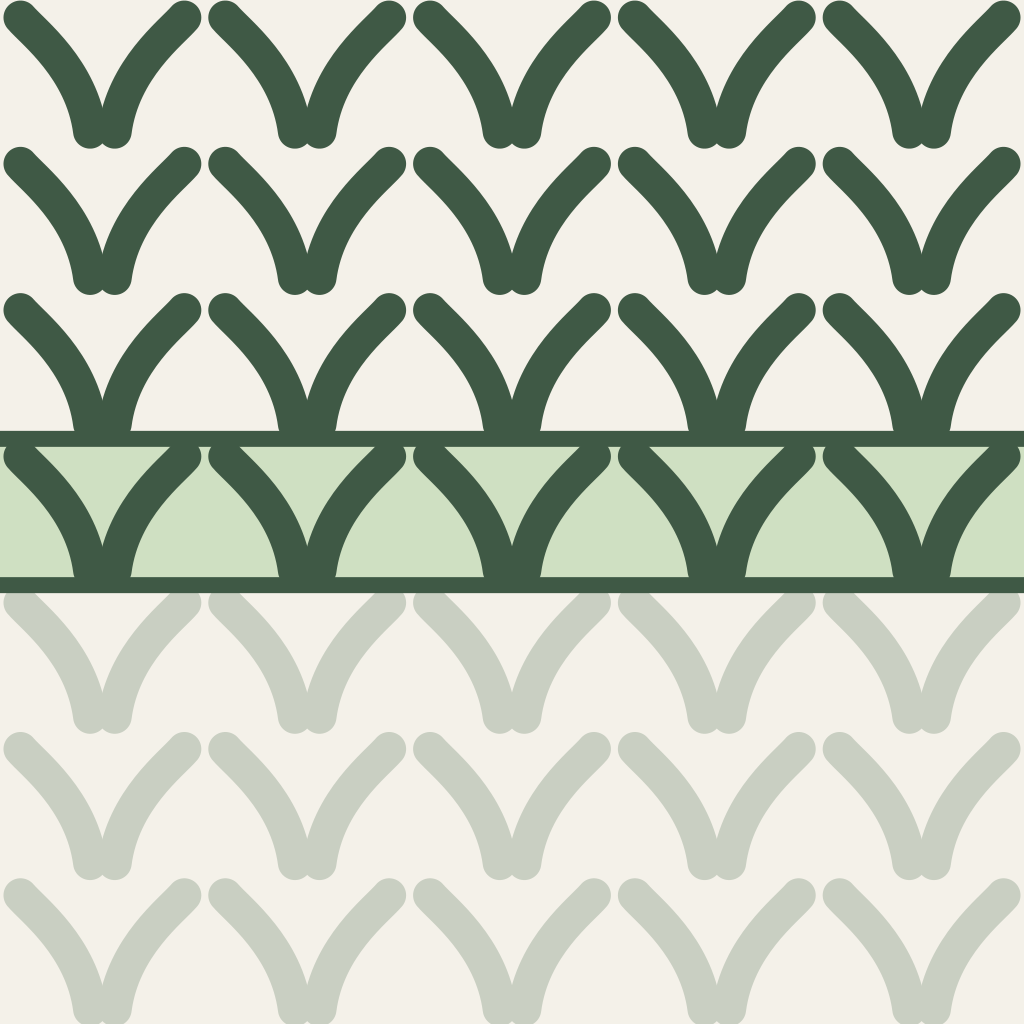
How to keep your place on a knitting chart
A colourwork or lace chart is easy to follow until you look up. The trick is to make the row you are on impossible to miss, and the rows you have finished impossible to confuse with it.
Read it the way you knit it
- Charts are read from the bottom up. Row 1 is the lowest row.
- Knitting flat, right-side rows are read from right to left and wrong-side rows from left to right. The row number usually sits on the side where that row starts.
- Knitting in the round, every round is read from right to left, because you are always on the right side.
- One square is one stitch. The key tells you what each colour or symbol means.
Mark the row, not the page
A magnetic board with a strip is the classic tool. Many knitters put the strip just above the row they are working, so the rows already knitted stay visible below it and can be checked against the stitches on the needle. When the row is done, the strip moves up one row.
Highlighter tape or a sticky note does the same job on paper. Avoid drawing a pencil line through the row you are knitting: it hides the symbols you need.
Count the runs before you start the row
In colourwork, read the row once and say the runs to yourself: three light, four dark, two light. A few short counts are easier to hold in your head than forty single stitches, and a mistake shows up at the end of a run instead of at the end of the row.
Move the marker as soon as the row is done
Most lost places come from an interruption between finishing a row and moving the marker. Move the strip, or tap the counter, before you put the needles down.
Doing it on a phone
Stitchhold keeps your place on the chart you already have. Attach the PDF, a photo of the page or a camera shot, and mark the first and the last row once. A band then sits on your row, and every Row done moves it up one row, with finished rows dimmed. If you turn on counts of identical cells, the next row shows its longer runs as numbers, counted from the picture itself. Your first project is free.